
2026-03-29 / 15 min read
Daily Productivity Ideas Powered by Random Generators (That Actually Work)
Use random generators to cut decision fatigue, spark ideas, and build a simple daily system—without relying on willpower alone.
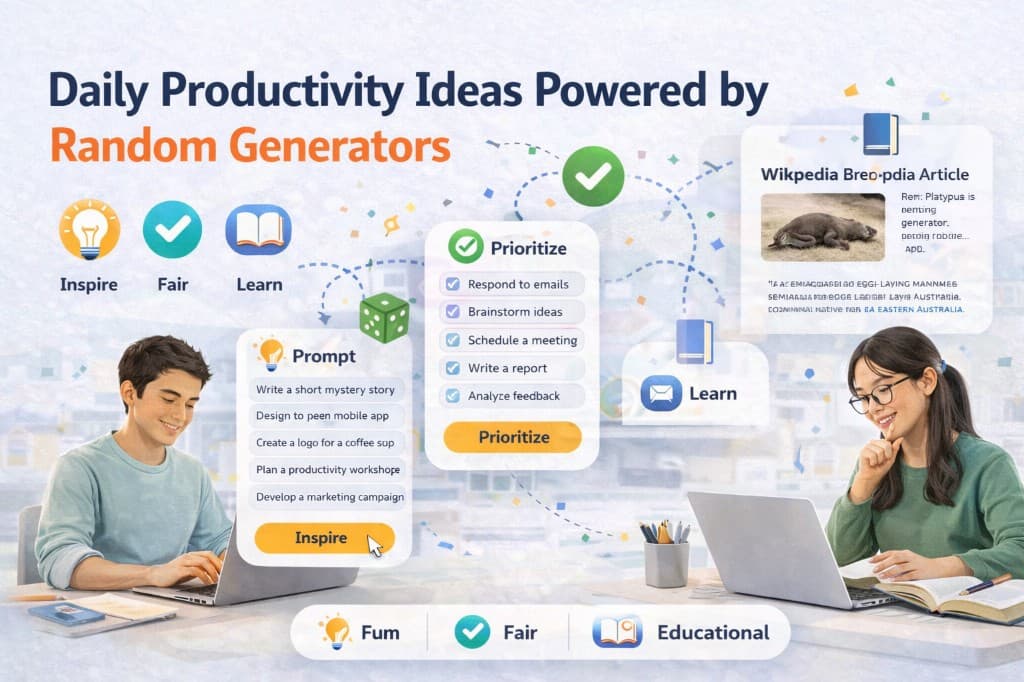
Introduction
If you have ever sat at your desk knowing you should be productive—but still felt stuck—you are not alone.
The real issue is not always discipline. Often, it is decision fatigue, overthinking, or repeating the same routine until it goes stale.
That is where random generators for productivity come in. Instead of forcing your brain to choose constantly, you let structured randomness suggest the next step. That small shift can unlock focus, creativity, and momentum surprisingly fast.
Why Randomness Can Improve Productivity
Most people assume productivity comes from total control. Too much control creates friction: when every micro-decision is planned, you burn energy before the real work starts.
Random productivity tools change that dynamic. Here is why they work in practice.
It reduces decision fatigue
Instead of choosing between many tasks, a random generator tool can pick the next action for you. Over time, that removes hours of hesitation.
It introduces novelty
Your brain responds to new stimuli. A random idea generator or random task pick adds variation so the day feels less like a loop.
It breaks perfectionism
When something is selected at random, it is easier to start without debating whether it is the perfect choice. Action comes first.
Why teams and creators use it
More creators, developers, and remote teams adopt light random workflows—not to be chaotic, but to remove unnecessary friction.
1. Use a random task generator to start your day
Starting is the hardest part. A long to-do list makes every item feel equally urgent.
A random task generator removes the first decision: you list candidate tasks, run a pick, and commit to one short work block (for example 20–30 minutes). Momentum usually follows.
This helps if you procrastinate or avoid tasks. The goal is not a perfect pick—it is motion.
2. Break creative blocks with a random idea generator
Creative work does not arrive on schedule. A random idea-style prompt gives your brain something concrete to react to.
Generate topics, combine unrelated concepts, or explore angles you would not normally pick. For example, a prompt might pair two themes—your job is to explain, argue, or design around it.
That forced creativity is common in marketing and content workflows where originality matters.
3. Use a random word generator for brainstorming
Generate a few random words, then connect them to your project. Unexpected combinations often become strong hooks for articles, campaigns, or product angles.
Because the starting point is less predictable, you avoid repeating the same headlines and examples—and readers often engage more with fresher framing.
4. Try random time blocks to improve focus
Rigid schedules fail when real life interrupts them. You can still keep structure while varying depth: mix 25-minute deep work with 40-minute focus or 15-minute execution sprints.
Varying length keeps attention from flatlining and reduces clock-watching. Pair random durations with a simple timer habit.
5. Use random decision generators to avoid overthinking
Low-stakes decisions still drain energy: which task next, which headline to draft first, which idea to prototype.
A random decision flow lets the tool break ties so you can spend judgment on higher-impact work.
6. Turn randomness into a daily productivity system
The leverage comes from stacking tools into a repeatable rhythm—not using randomness once in a while.
Morning: random task pick to start. Midday: idea or word prompts for creative work. Afternoon: varied time blocks for focus. Evening: short reflection prompts if you journal or retro.
You are not random all day—you deploy randomness where it removes friction and keeps energy up.
Final Thoughts
Productivity is not only discipline and planning. Sometimes the breakthrough is removing friction so action happens naturally.
Daily productivity ideas powered by random generators help you stop overthinking, start faster, and stay engaged longer—which matters in fast-moving work.
FAQs
1. What are random generators for productivity?
They are tools that pick tasks, ideas, durations, or binary choices so you spend less energy on low-stakes decisions and more on execution.
2. How can a random task generator improve productivity?
It lowers the barrier to starting by choosing a first task for you, which is often the hardest step.
3. Are random idea generators useful for content creation?
Yes. They are widely used for brainstorming and can surface unique angles quickly when you pair prompts with your expertise.
4. Do random productivity tools really work?
They work best when paired with clear goals. They reduce mental fatigue and novelty dips, which helps consistent output.
5. Can I use random generators daily?
Absolutely. Many people build small routines around picks, prompts, and timed blocks to stay consistent without burning out.