
2026-04-01 / 14 min read
Random Tools for Classroom Games and Learning Activities
Boost engagement with random name pickers, team generators, wheels, and questions—structured for fairness, focus, and real learning outcomes.
Introduction
If you have ever felt a class slipping into autopilot, you are not alone. Even the most well-planned lessons can lose energy halfway through. That is exactly where random tools for classroom games make a difference.
They do not just add fun. They create structure, fairness, and just enough unpredictability to keep students mentally present. When used correctly, they support real learning outcomes—not only entertainment.
Below is a deeper look at how each type of tool works and how to use them in real classroom settings, with links to BestRandom generators you can try today.
Why Random Tools Work So Well in the Classroom
Students are wired to respond to uncertainty. When they do not know who is getting called next or what is coming up, they stay alert. Random classroom tools tap into that curiosity.
It removes bias
When you use a random name picker for students, everyone knows selection is fair. That alone increases participation because students cannot hide from a pattern they perceive as unfair.
It improves focus
With random learning activities, students stay prepared because they might be chosen at any moment.
It can lower pressure
Randomness often feels fairer than being singled out directly, which can reduce anxiety for some students while still holding everyone accountable.
From passive to active
In short, these tools help turn passive classrooms into active ones without forcing engagement through lectures alone.
Best Random Tools for Classroom Games
Not every tool fits every moment. Each one supports a different activity type—and matching tool to goal is what keeps randomness productive instead of chaotic.
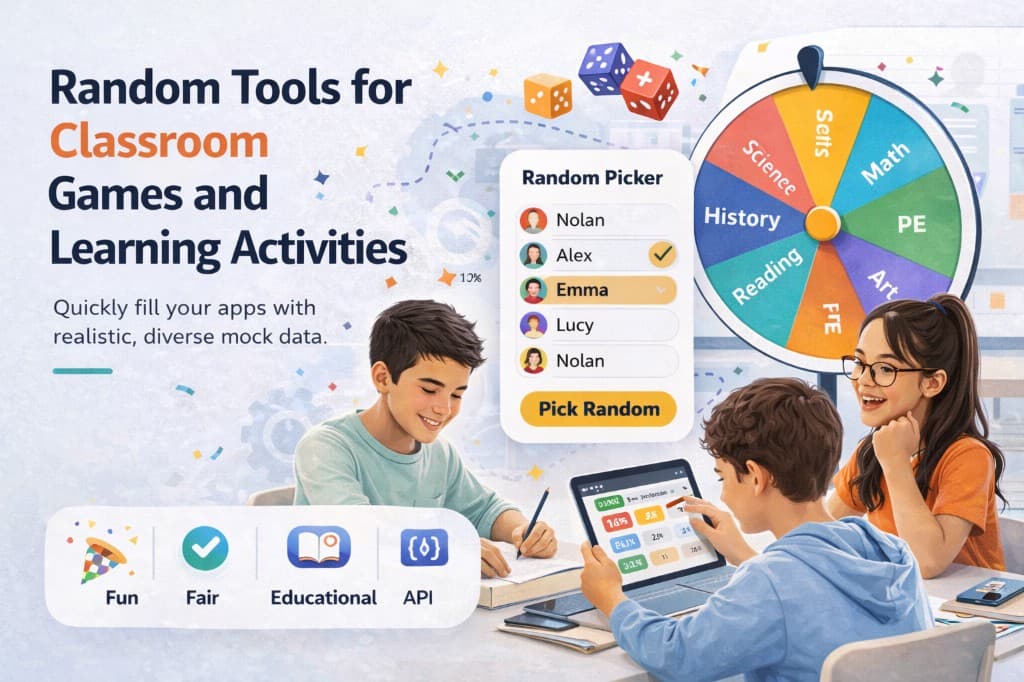
Random name picker
A random name picker for classroom use is one of the most practical tools to start with. The tool chooses for you, which reduces any perception of favoritism and keeps students accountable.
You can use it for daily participation checks, reading aloud, and quick Q&A rounds. Over time, students learn they might be picked anytime, so they stay engaged without constant reminders.
Random group generator
Group dynamics can make or break an activity. A random group generator for classroom settings helps break the same social clusters from repeating every week.
Instead of letting students only work with friends, you mix abilities and personalities. That supports problem-solving tasks, project-based learning, and classroom debates—and builds communication with different peers.
Random question generator
Fresh questions every day are hard to sustain manually. A random question generator for students adds variety and prevents predictable patterns.
Use it for lesson warm-ups, exit tickets, and review sessions. Students cannot memorize the sequence, so thinking stays sharp.
Random wheel spinner
The random wheel for classroom games is one of the most engaging tools—visually and psychologically. The motion pulls attention fast.
Teachers often use it for reward systems, topic selection, and bonus challenges. It works especially well with younger students, but older classes still respond to the suspense.
Random number generator
Simple but powerful: a random number generator for classroom use is easy to overlook. Use it to assign textbook questions, pick students by roster number, or randomize turns in games.
Because it is fast and flexible, it fits almost any subject without derailing the lesson flow.
How to Use Random Tools Effectively (Without Losing Control)
Randomness works best inside clear boundaries. Without expectations, it can feel chaotic instead of purposeful.
Set clear rules first
Before any random classroom activity tool runs, make expectations obvious: what happens when someone is selected, how much time they have, and what counts as a complete response.
Combine randomness with learning goals
Random tools should support outcomes, not only novelty. Tie each action to a purpose: a name pick leads to answering a concept question; a group split leads to a defined task; a topic draw leads to a short explanation.
Rotate tool types
Using the same format every day dulls the effect. Rotate between different random tools for students across the week so the room stays dynamic.
Real Classroom Examples
Here is how the same ideas look in concrete lesson moments.
Vocabulary review game
Use a random word generator to select vocabulary terms. The selected student defines the word, uses it in a sentence, and connects it to the lesson.
This builds understanding and speaking confidence in one short cycle.
Math challenge rotation
A random number generator selects problems from a worksheet or textbook. Students take turns at the board; optional timers increase focus.
Repetition stays useful without feeling identical every round.
Debate starter activity
Use a random question or topic-style prompt for discussion. Assign positions (for or against) with a quick random pick so students practice argument and listening.
Pair the question generator with a picker if you want random sides as well as random speakers.
Final Thoughts
Teaching is not about controlling every second. It is about guiding attention.
With the right random tools for classroom games and learning activities, you can keep students engaged, involved, and ready to participate—without complex systems. A few simple tools, used with clear rules and learning goals, can change the energy in the room.
FAQs
1. What are the most effective random tools for classroom use?
The most effective tools depend on your goal: random name pickers and wheels for fair participation, team generators for grouping, question generators for prompts, and number generators for quick rotation.
2. How do random tools improve student engagement?
They introduce constructive unpredictability, which keeps students alert and spreads participation across the whole class.
3. Can these tools be used in virtual classrooms?
Yes. Most online random classroom tools work well alongside Zoom, Google Meet, or Google Classroom—share your screen for wheels and picks, or share a reproducible link when your tool supports it.
4. Are random tools suitable for all grade levels?
They can be adapted from elementary through high school and adult learning; adjust pacing, question difficulty, and how much scaffolding you provide.
5. Do random tools support actual learning outcomes?
Absolutely—when every random action ties to a lesson objective, they reinforce recall, fluency, discussion skills, and confidence—not only novelty.